Part 2: How advertising builds CEP associations

 Back to articles
Part 1 of this article talked about the benefit of associating a brand with different usage contexts, or Category Entry Points, by establishing Distinctive Meaning Assets, or DMAs. Part 2 explores DMAs in more detail with the help of some famous examples.
A DMA is any distinctive sensory experience (sight, sound, smell, taste, tactile sensation) or action that connects a brand with a need or usage occasion in the minds of consumers. They are similar to Distinctive Brand Assets, but they won’t necessarily be used by a brand indefinitely, and they’re designed to convey meaning rather than just signify the brand.
Here are some well-known examples of DMAs:
- Apple iPod silhouette dancing. This visual device connected iPods with music, dance and a sense of self-expression or freedom.
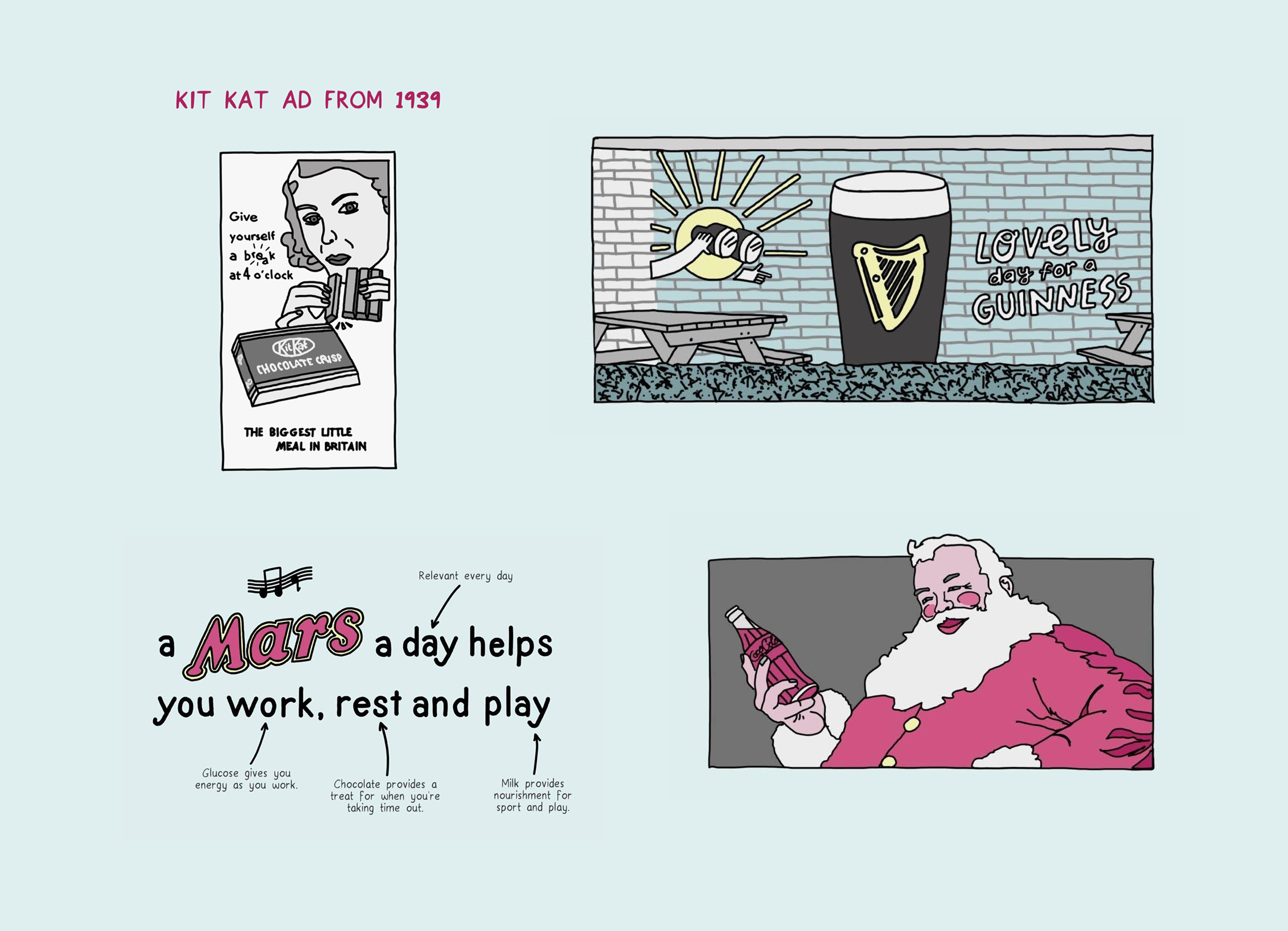
- “Have a Break, have a Kit Kat”. This slogan connects the brand with downtime moments.
- Andrex puppy (running away with the toilet paper). This communicates both softness (implicitly since puppies are soft), strength (the paper never breaks) and length (the puppy runs a long way before the paper runs out).
- Guinness visuals and the phrase “Lovely Day for a Guinness”. These have been used by Guinness in its summer campaigns since 2022 to get people thinking of Guinness when the sun is out.
- Coca-Cola’s “Holidays are Coming” advertising. This long-running campaign makes people think of Coke as an essential drink during the festive period.
- Mars’s old slogan “A Mars a day helps you work, rest and play.” This phrase, and the tune that went with it, connected the brand to multiple CEPs.
Once a target CEP has been identified, a brand should focus on it for at least a year or so. Repeating the association across media channels and over time, with the help of DMAs, increases the brand’s chances of ‘owning’ the CEP. Once a connection has become well established, it may last for years with little or no reinforcement.
This allows the brand to move on to other CEPs. Market research should be used to identify which CEPs are currently most prevalent, which are likely to grow or decline in future and which are underserved by competitors and potentially worth targeting.
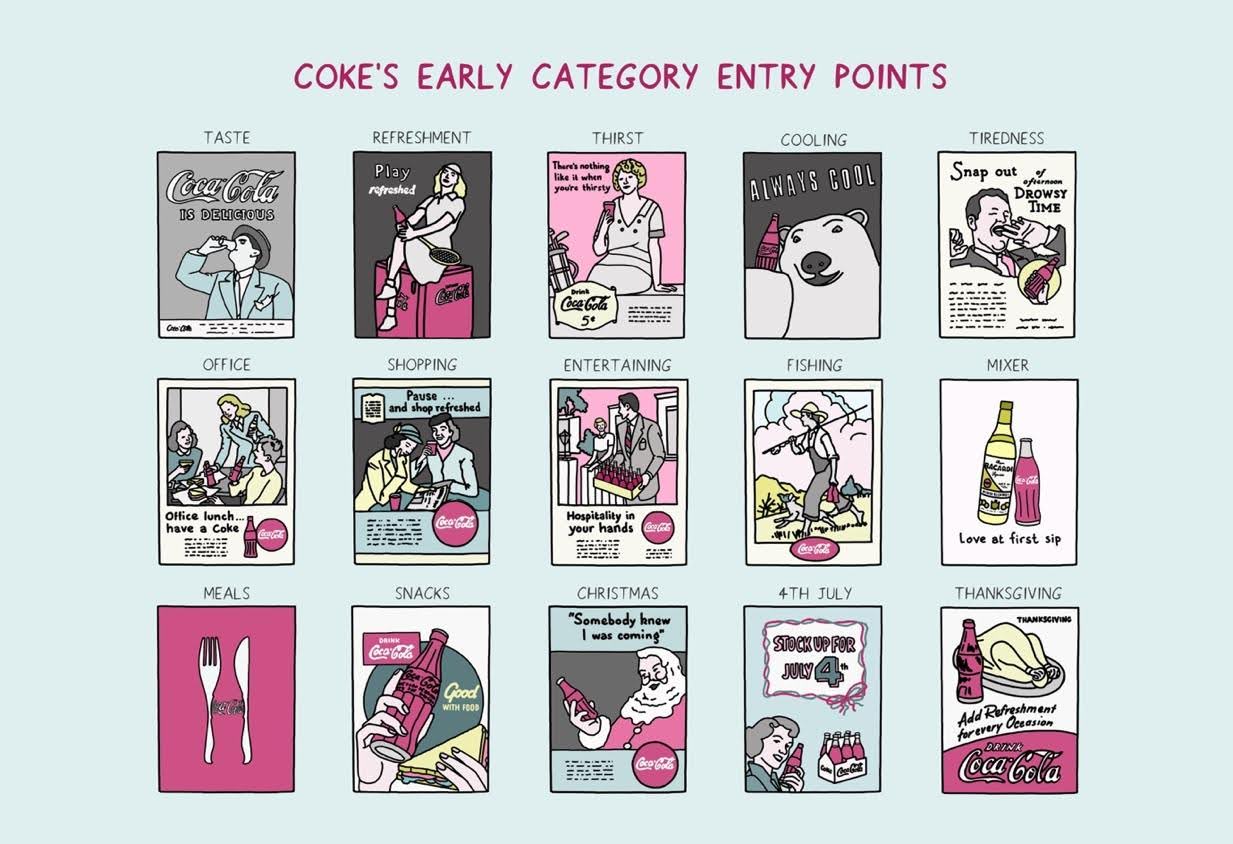
Throughout the 20th century, Coca-Cola used advertising to connect the brand with a wide range of Category Entry Points from fundamentals such as taste, refreshment and thirst to social moments, mealtimes and national holidays.
In the end, the brands that win aren’t necessarily the loudest or those with the biggest budgets – they’re the ones that build the strongest, most relevant connections in people’s minds. By understanding how associative memory works and deliberately linking your brand to your target Category Entry Points, you ensure your brand is not just seen but remembered at the moments that matter most.
Advertising, at its best, isn’t about persuasion or intrusion; it’s about creating mental shortcuts that make choosing your brand feel natural, easy, and inevitable. The task for marketers, then, is to identify the right moments, forge the right connections, and keep reinforcing them. Your brand should become the one people think of, without even thinking. The best DMAs are memorable and effortlessly connect the brand with a need or usage occasion.

Media & Broadcast

Nudging modern attention: How streaming platforms can make remembering easier
FMCG
A new appetite: How FMCG brands can innovate for the GLP-1 consumer

Shopper & Retail
Tapping into “cosy season” with simple seasonal wins for retailers.